Provo Art Stroll, self-initiated
November 2025 · Provo, Utah
Creative Technology · Interactive Development
Overview
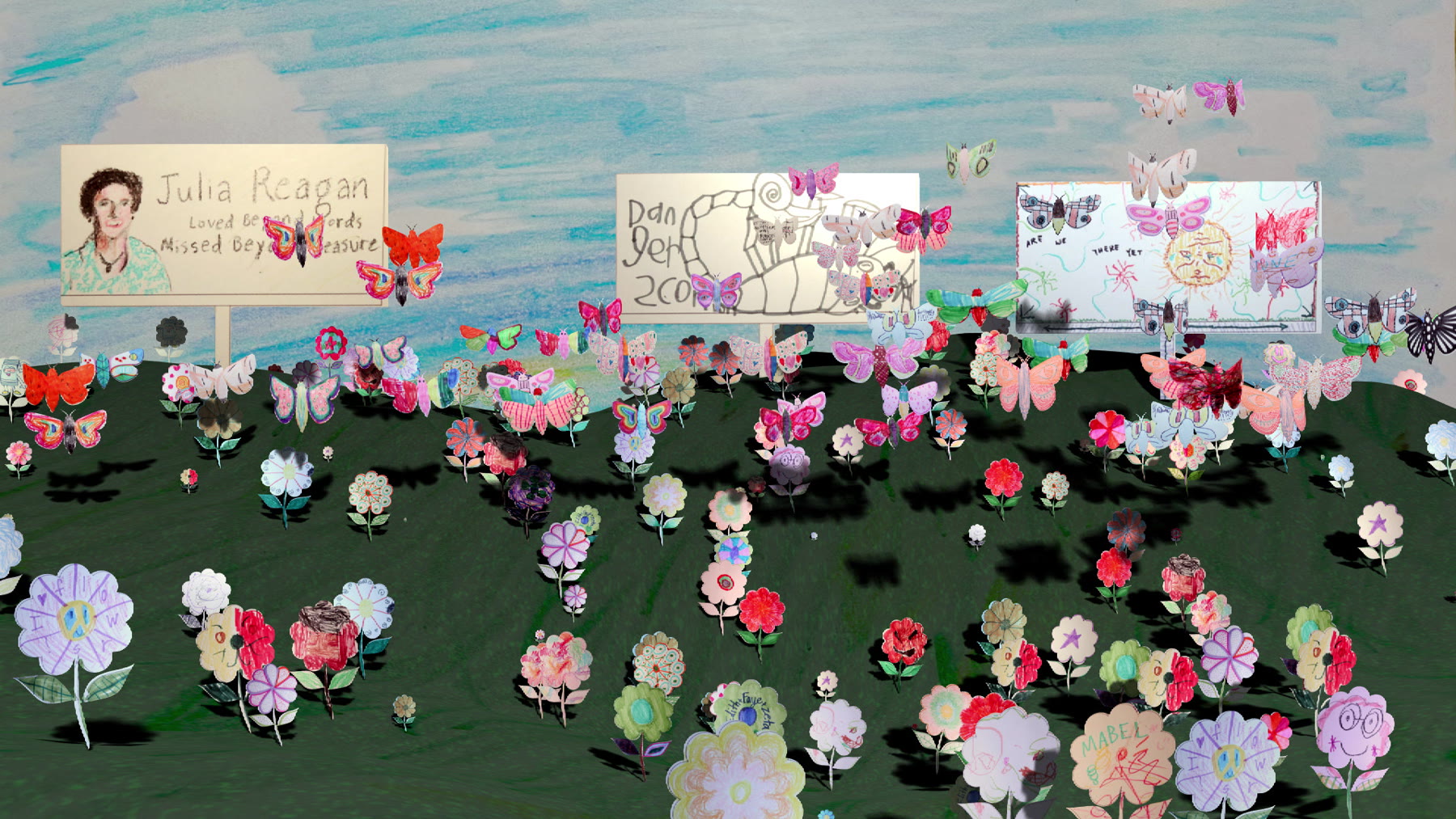
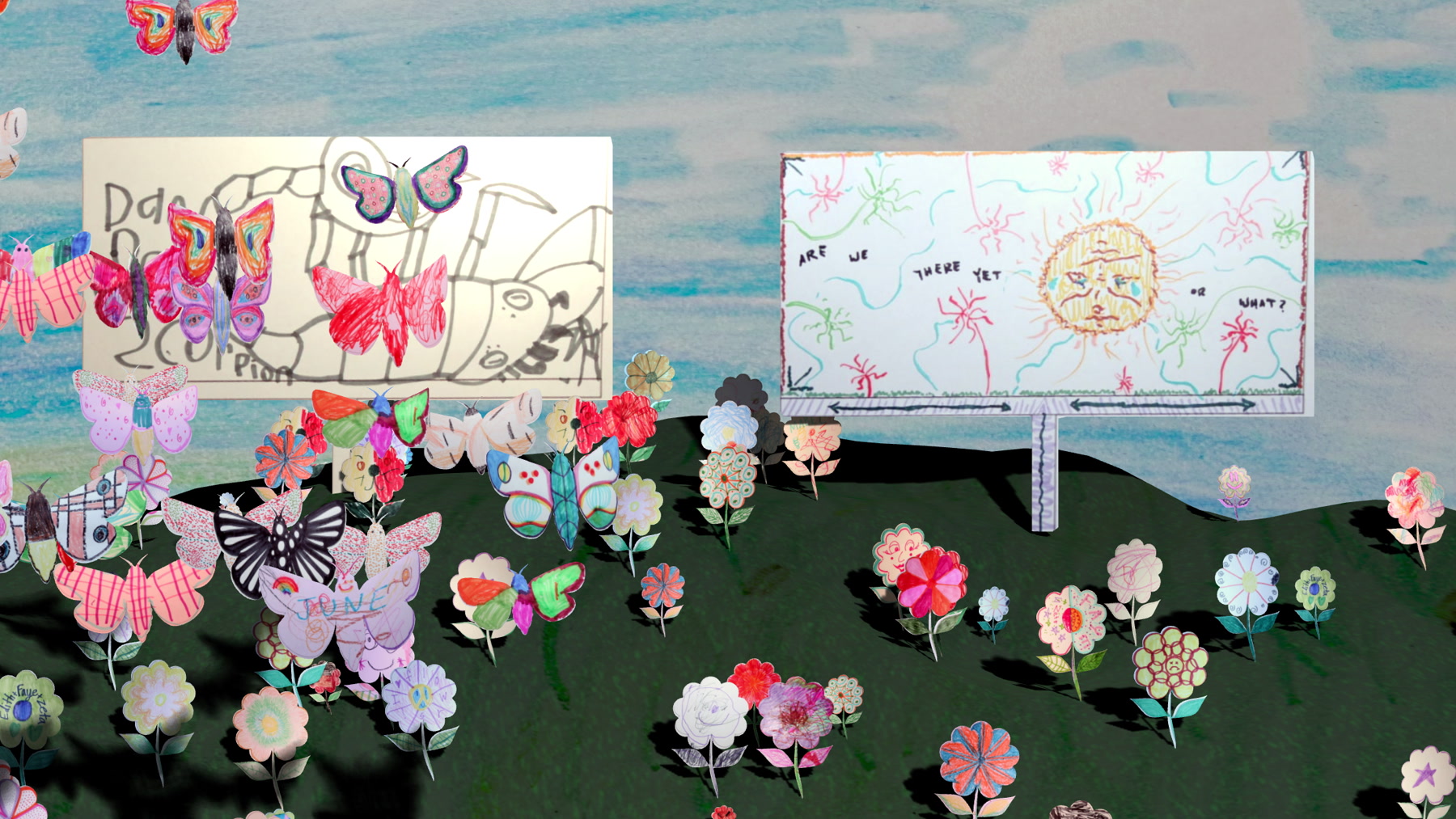
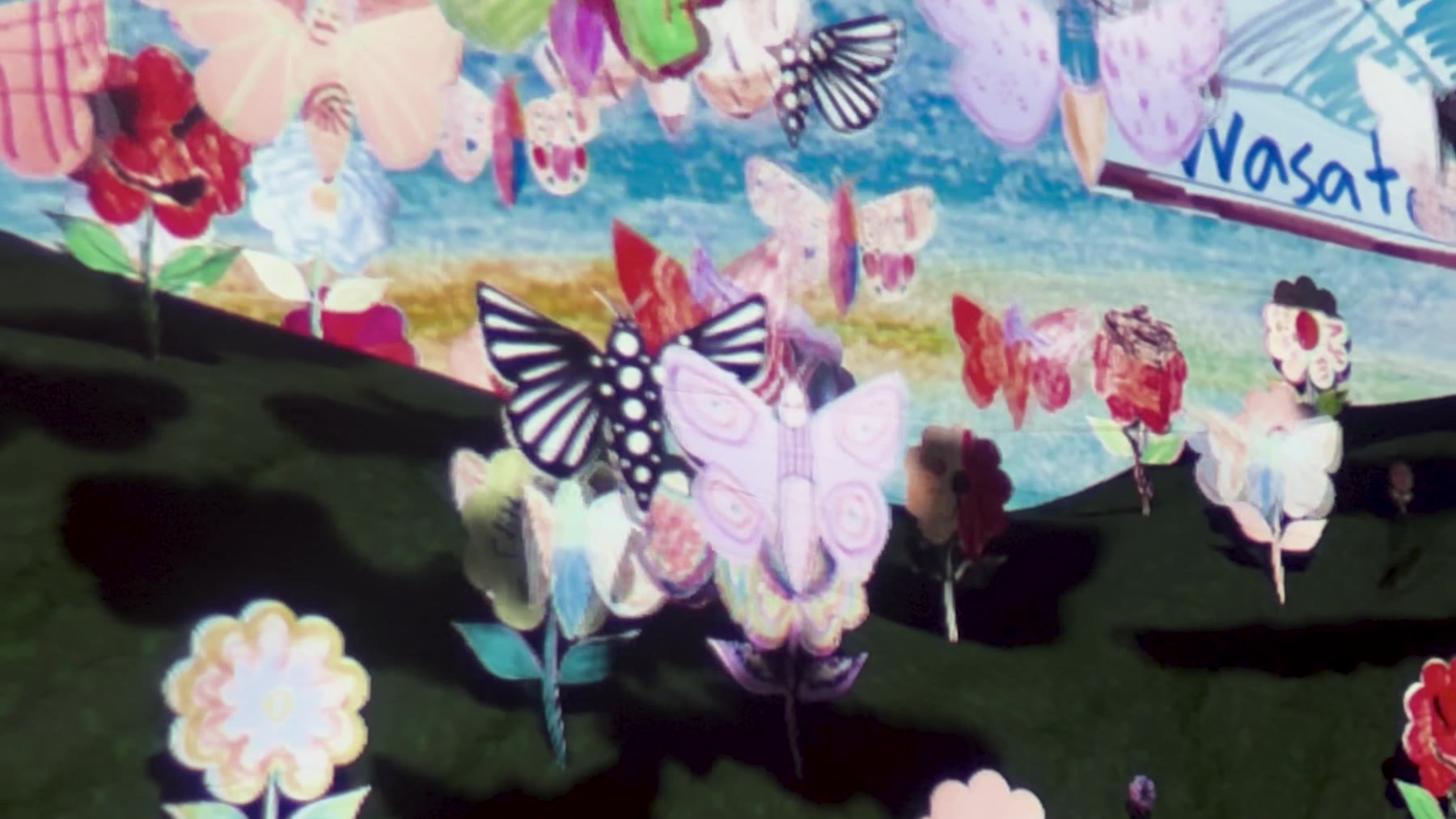
For the November 2025 Provo Art Stroll, we created Coloring World: a hand-colored drawing station paired with a large-scale projected landscape, inspired by TeamLab’s collaborative Sketch installations. Visitors colored a billboard, flower, or butterfly however they wanted, scanned it at a button-press station, and immediately watched their artwork come to life in a shared, growing world. Over the course of the night, a few hundred drawings joined the scene.
The Experience
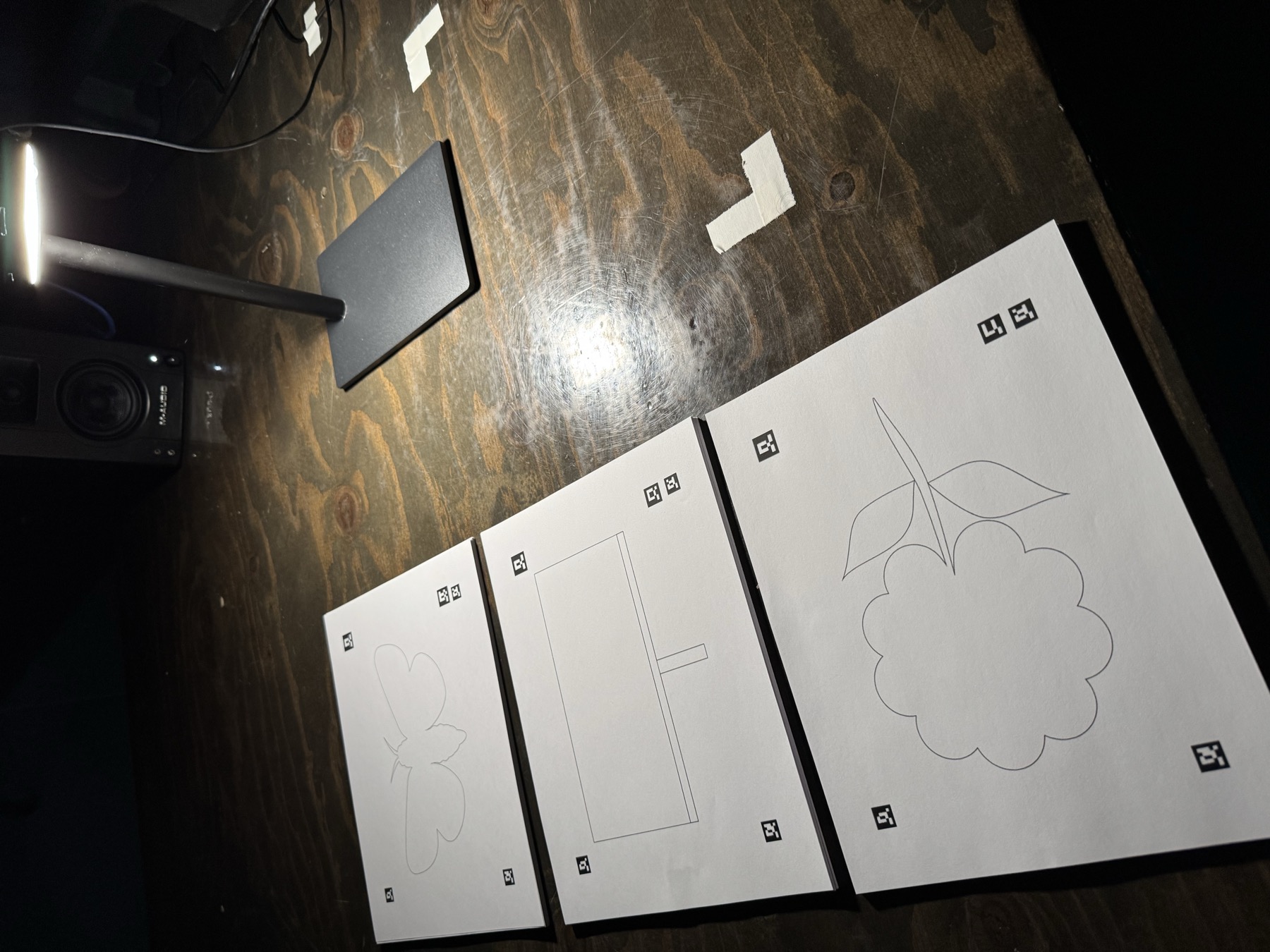
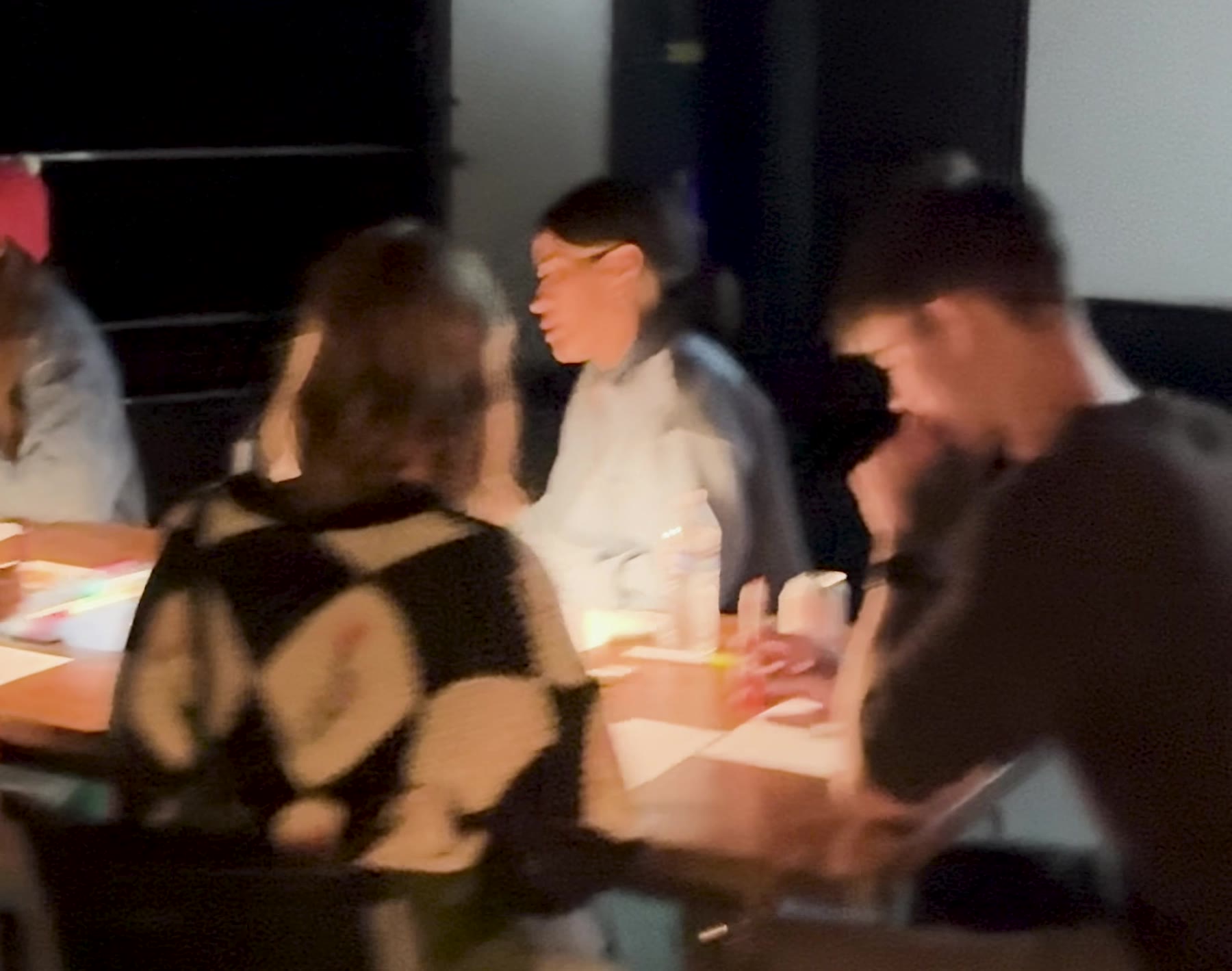
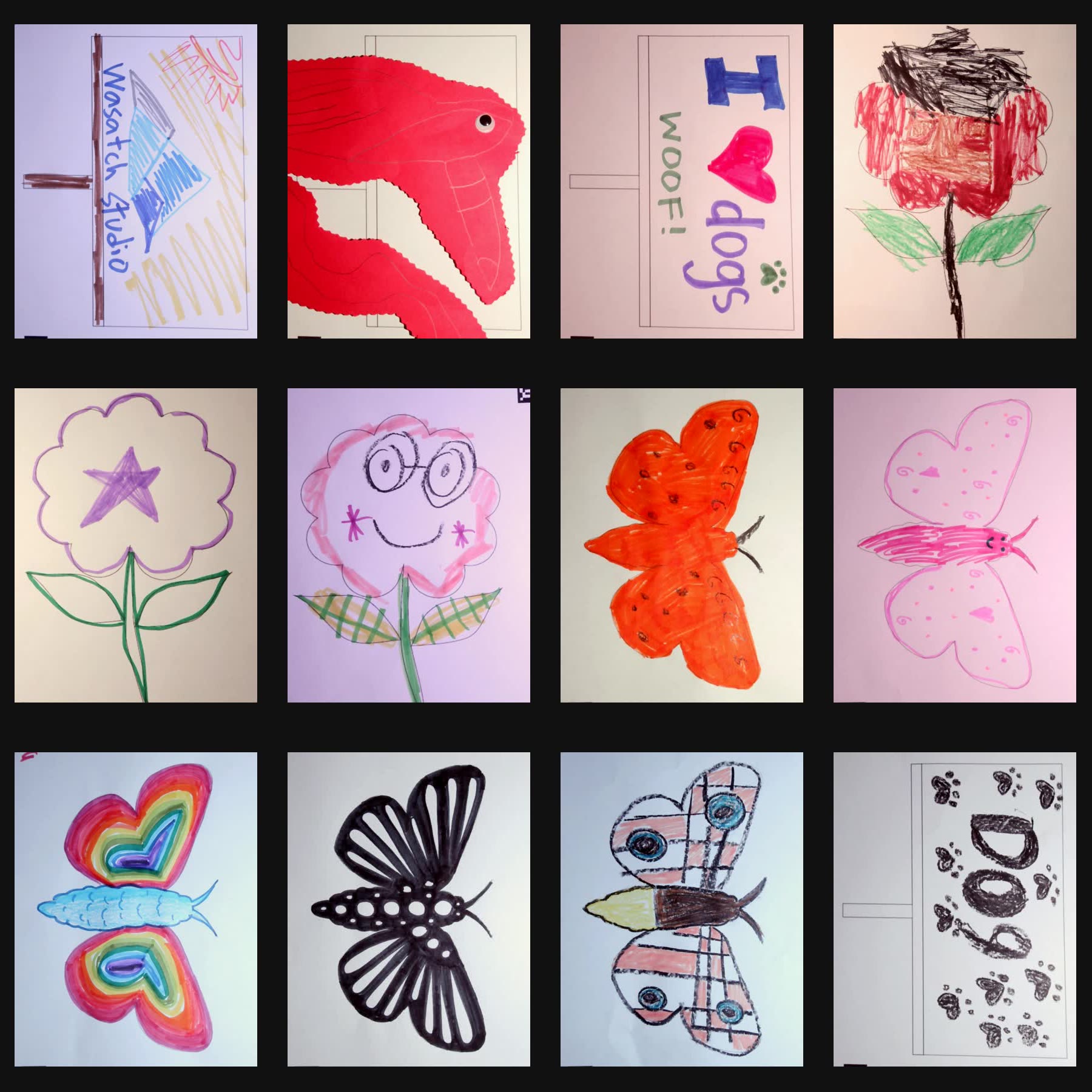
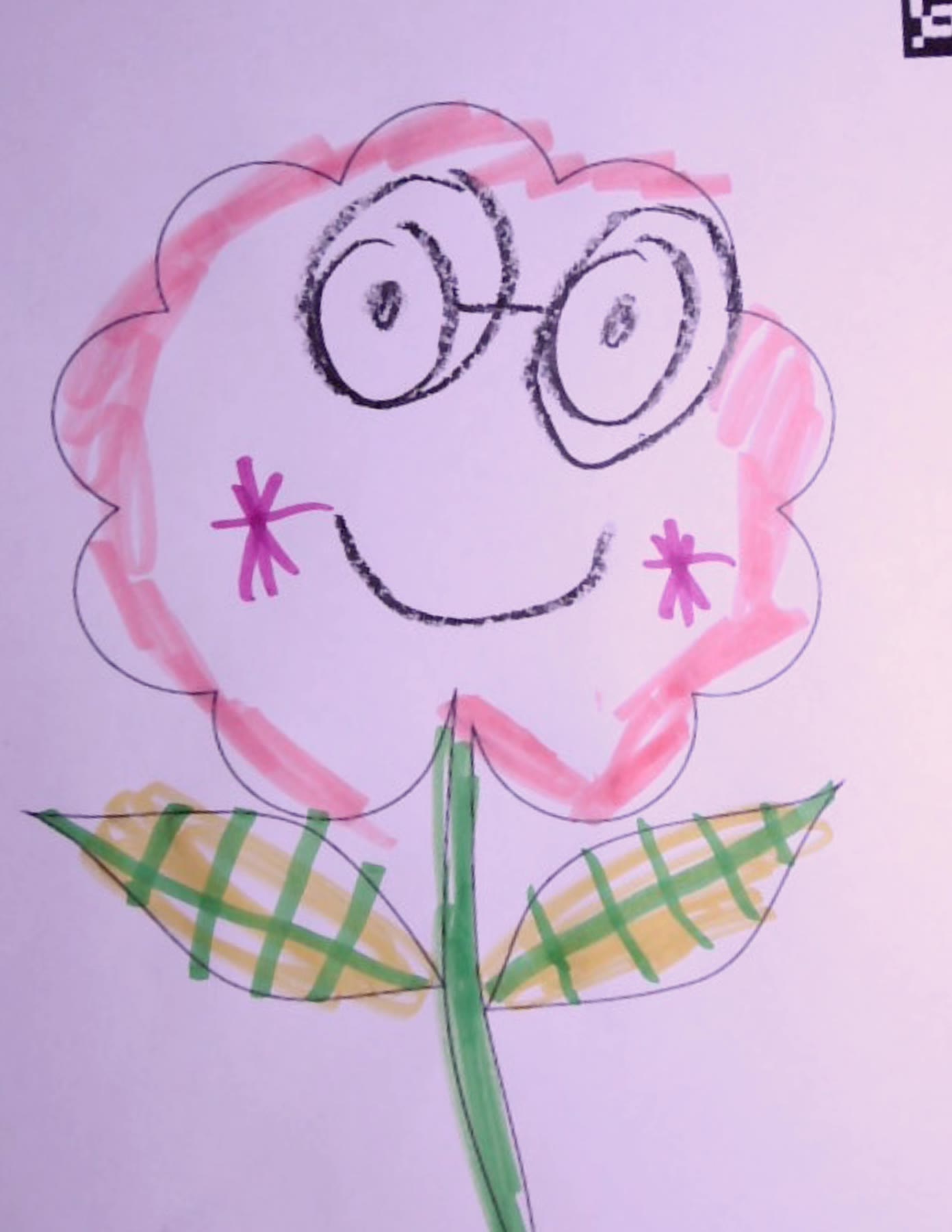
Visitors started at a table with markers, crayons, and a choice of three coloring pages: a billboard, a flower, or a butterfly. There were no rules about how to color them: some drawings were carefully artistic, some carried messages, some went fully abstract.
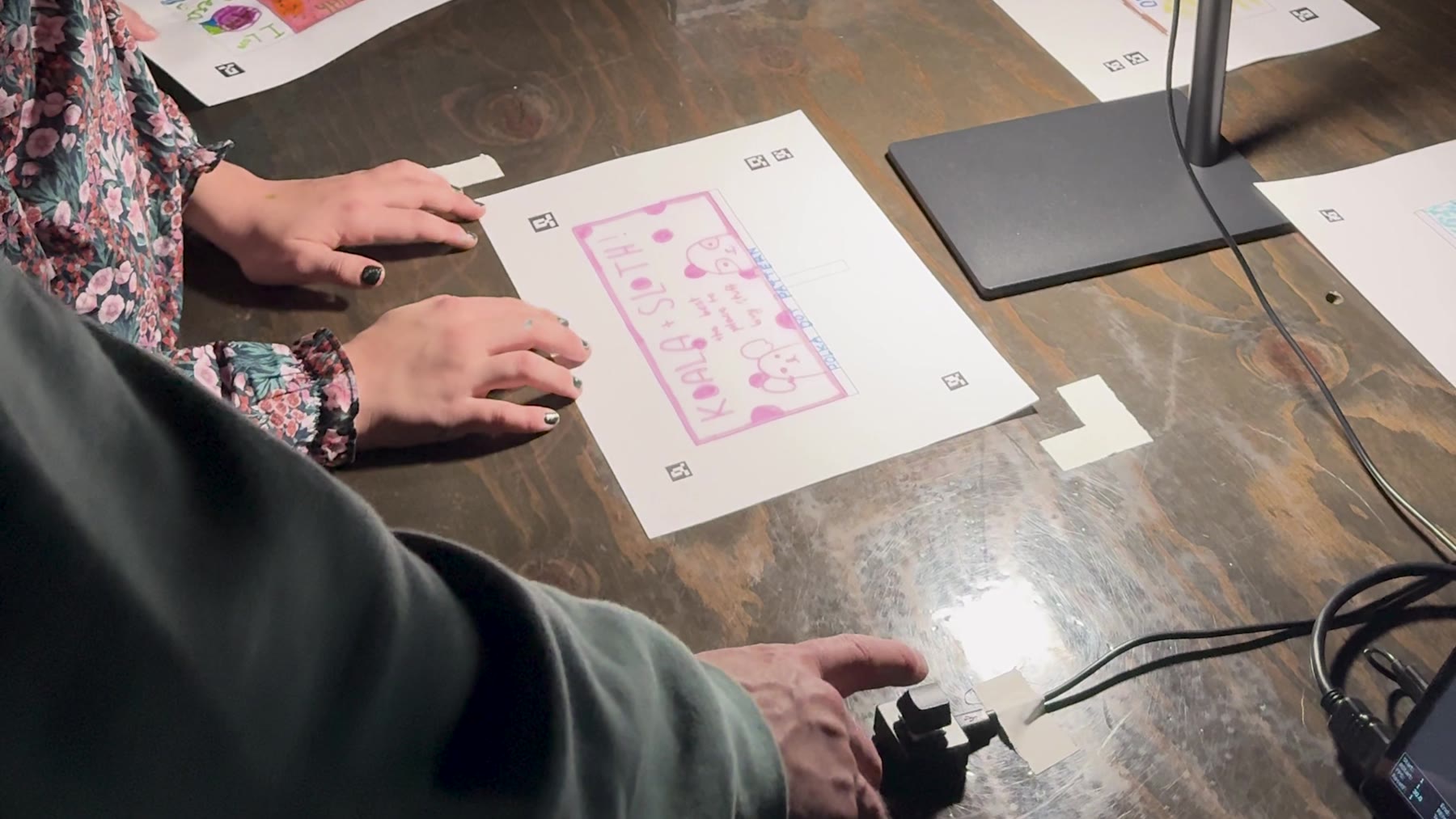
When they finished, they placed the page under a camera at the scanning station and pressed a single button. Their drawing appeared in the projected landscape within moments, and the fun became finding it, then watching what it did.
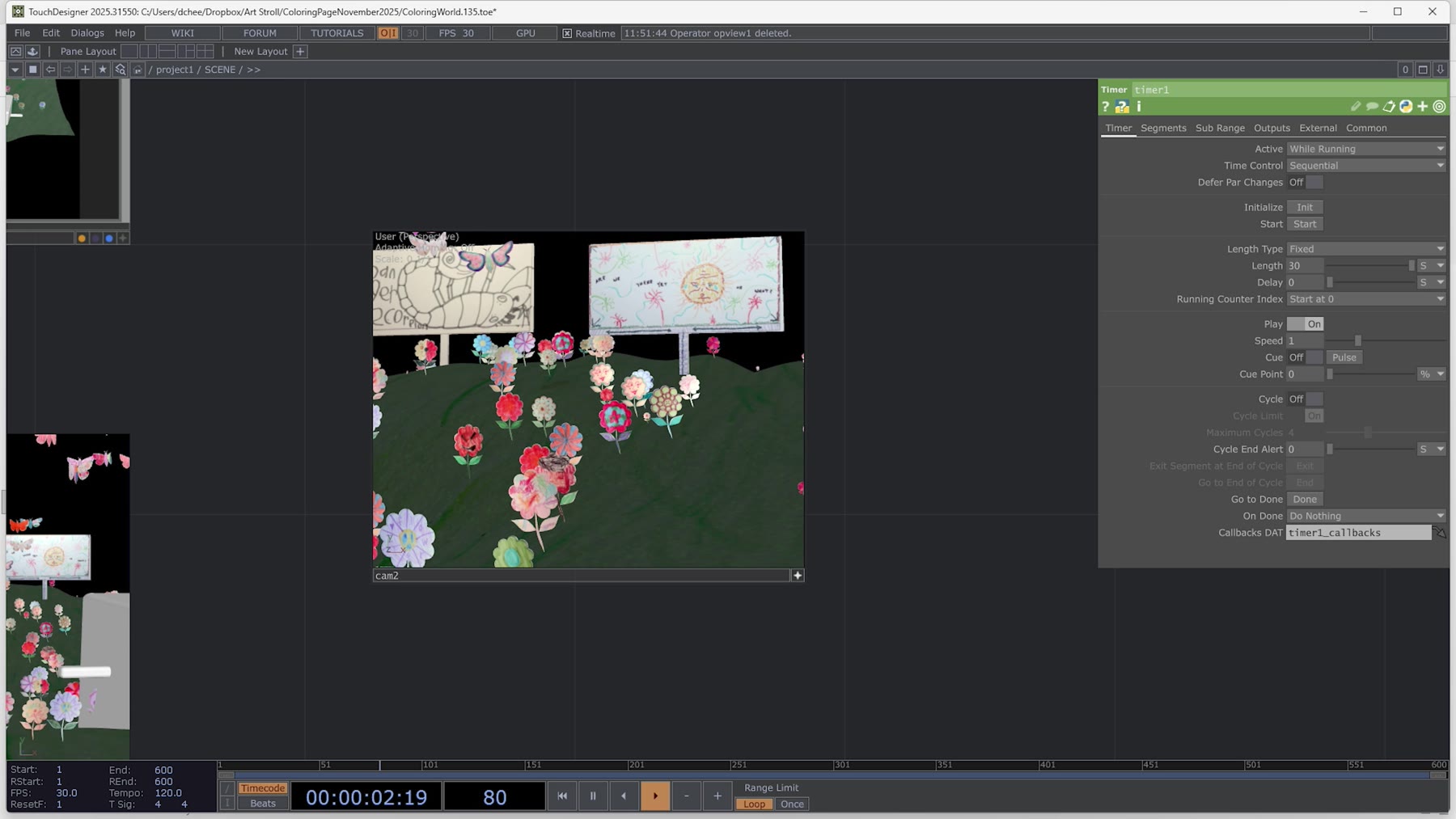
Each object had its own life in the world. Butterflies took flight, drifting through the scene and sometimes wandering off the edge. Flowers took root and stayed, growing and swaying in the wind for the rest of the night. Billboards claimed the most prominent spots, but only three could stand at once. Each new submission pushed the oldest one off.
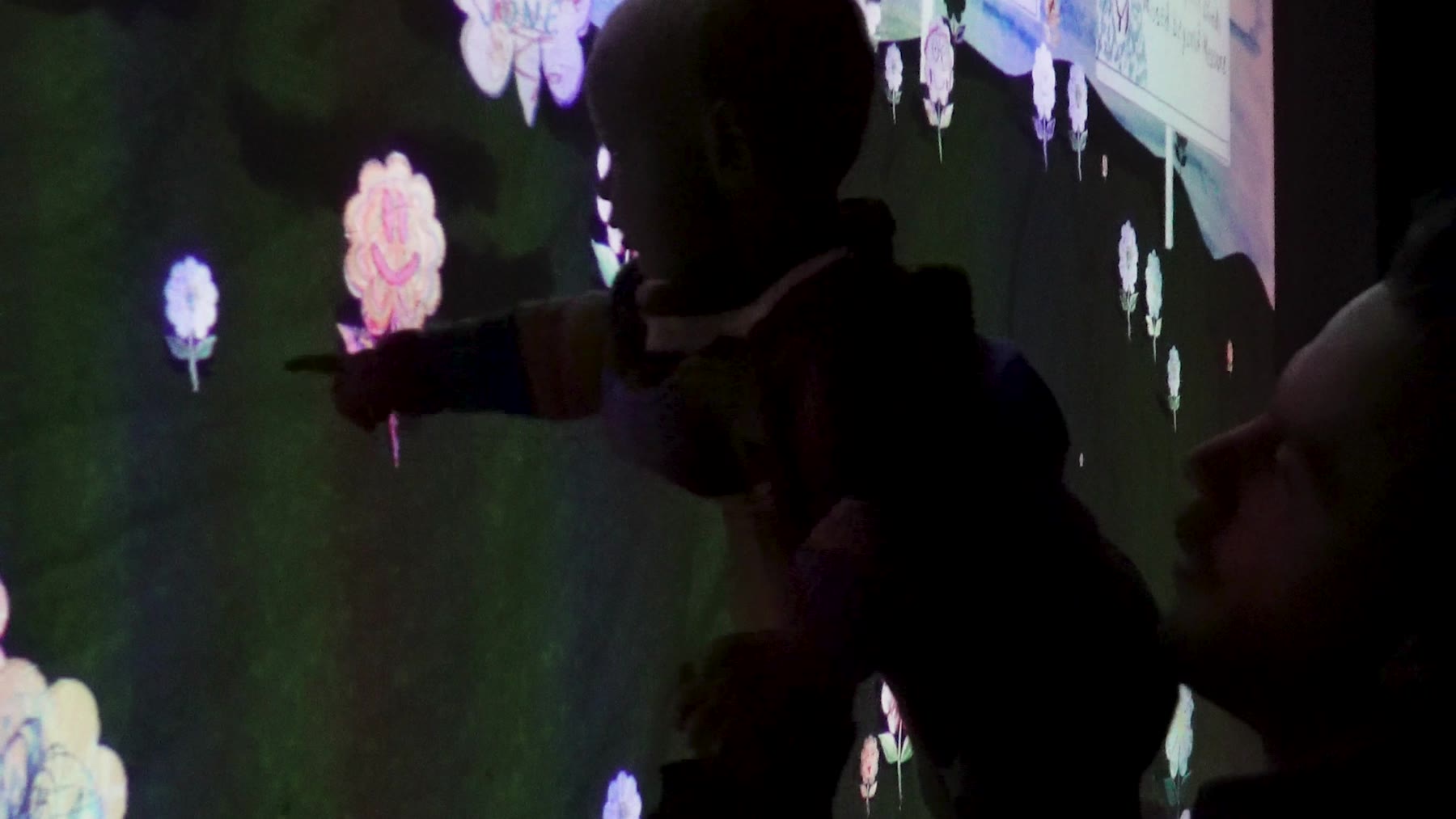
The landscape lived on a large inflatable rear-projection screen, so people could walk right up to find their artwork without casting shadows on the image.
From Paper to Pixels in One Button Press
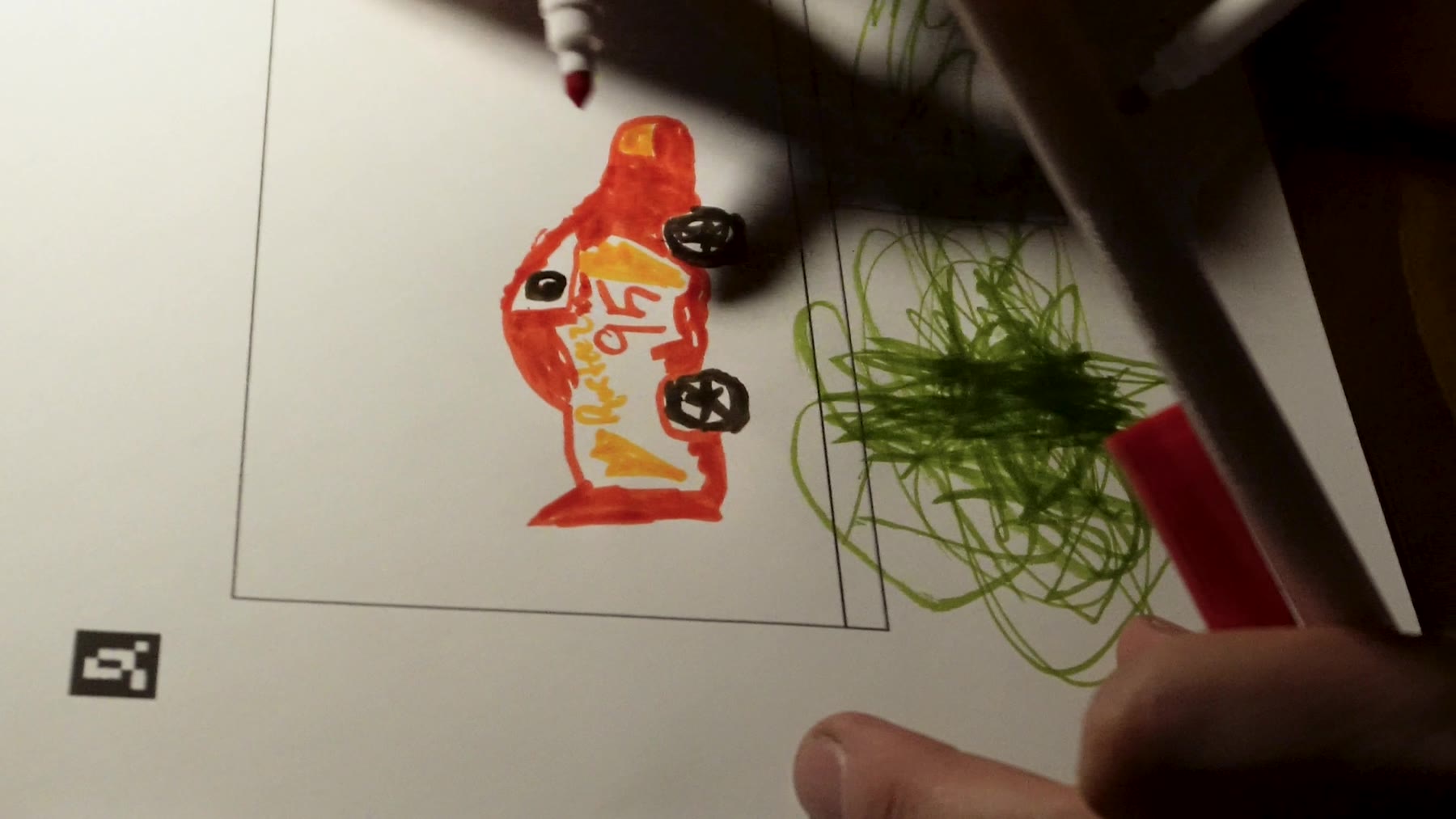
The scanning station had no operator and no software anyone had to learn: just a camera, a light, and one button. Each coloring page carried four printed fiducial markers: three marking the corners of the drawing, and a fourth that told the system which object type it was looking at. A custom Script TOP in TouchDesigner detected the markers’ position and orientation, corner-pinned the capture into perfect alignment, and mapped the artwork onto the UV coordinates of that object’s 3D model.
A successful scan played a confirmation chime. That small piece of feedback mattered: if a hand or a curled page corner hid one of the fiducials, the scan could fail silently. The chime told visitors instantly whether their drawing had made it into the world or needed a second press. That meant a page could be placed down crooked or off-center and still scan correctly, and a five-year-old could run the whole station themselves.
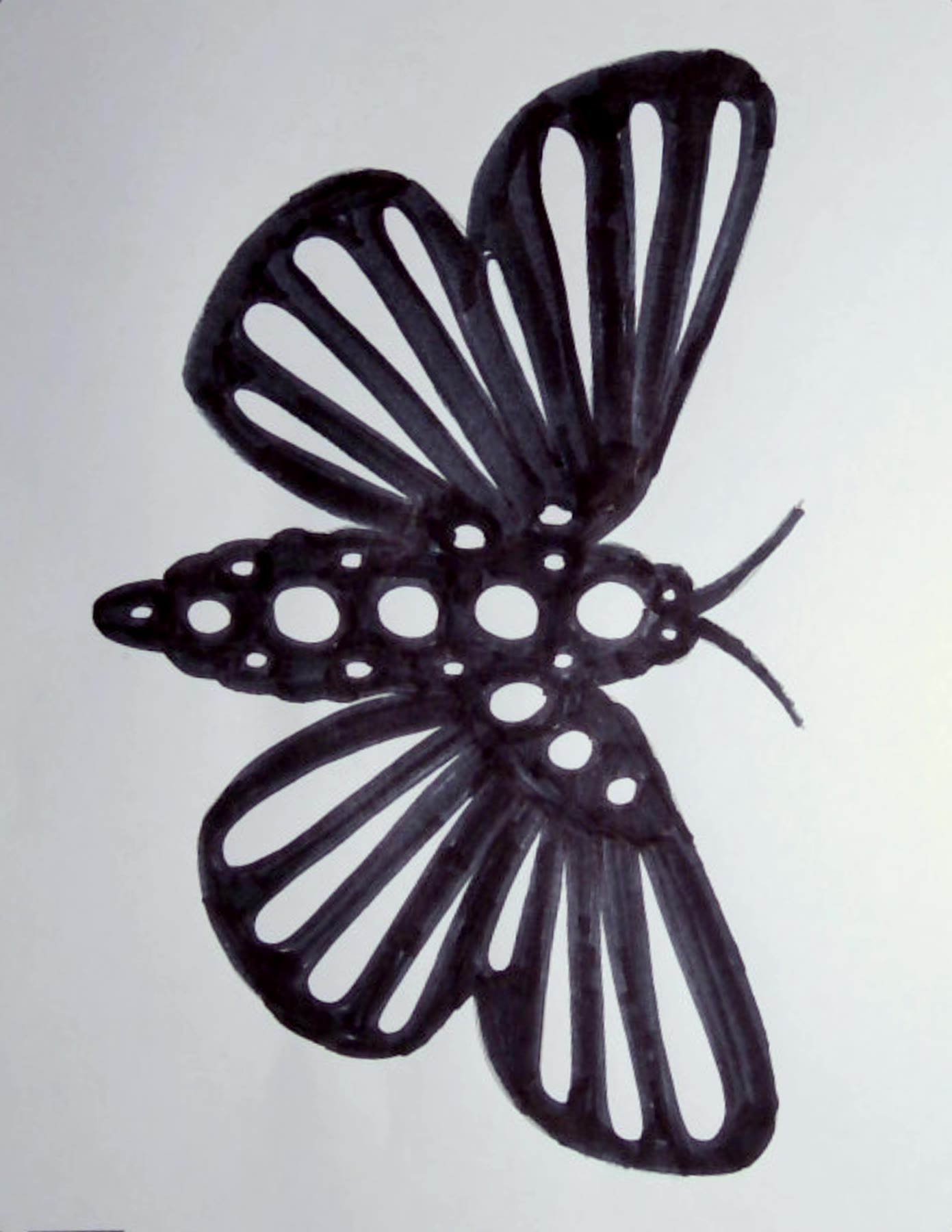
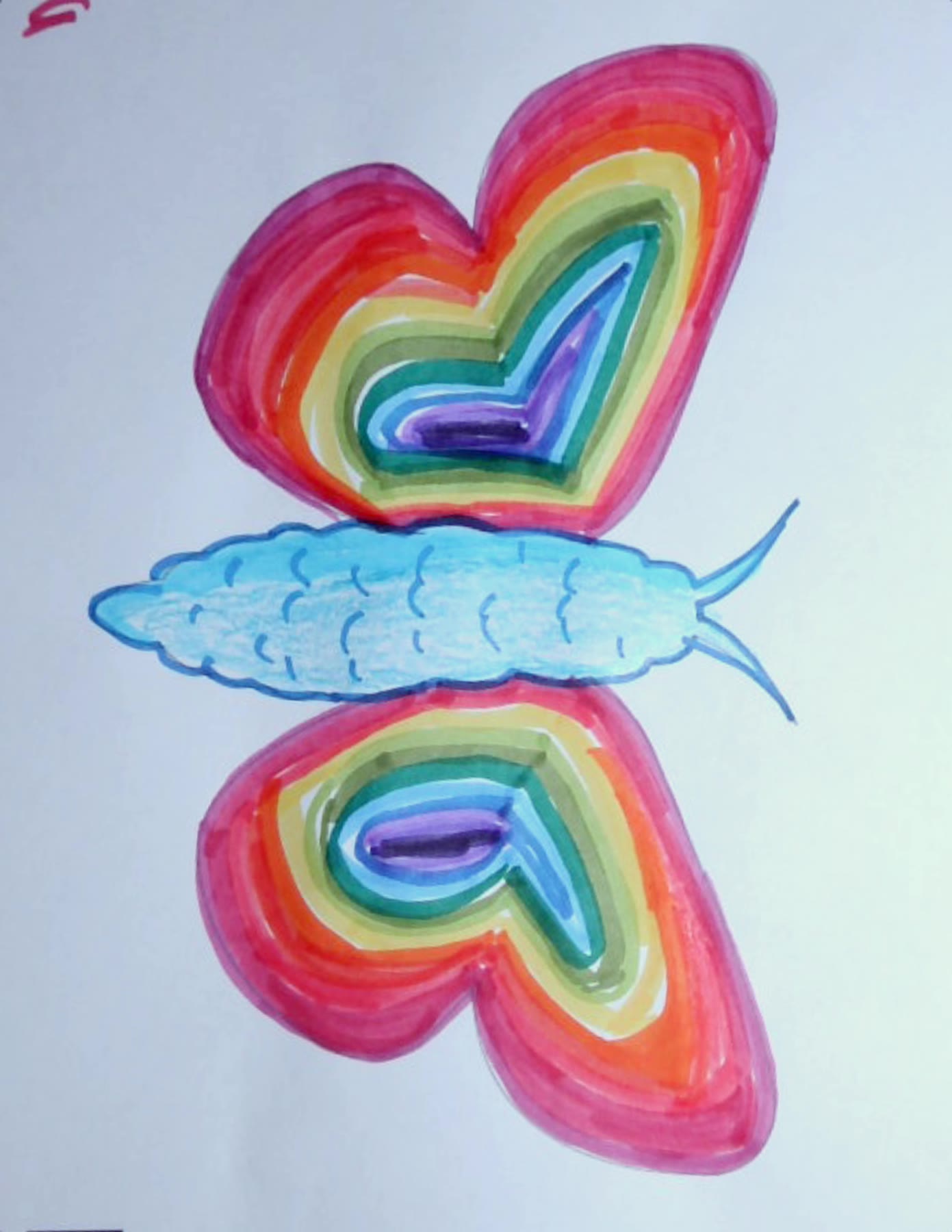
A World With Rules
Every object type had its own lifecycle, which kept a few hundred submissions from becoming visual noise. Butterflies flew freely and eventually left the scene. Flowers were permanent residents, accumulating into a growing field that swayed in the wind. Billboards, the biggest canvas and the one people used to broadcast messages, were limited to three at a time, with each new submission pushing out the oldest. The world stayed legible all night while still making room for everyone.
Technical Specifications
- Display
- Large-scale rear-projected inflatable screen
- Capture
- Overhead camera scanning station with a single USB hardware button
- Computer vision
- Custom Script TOP in TouchDesigner: fiducial marker tracking and corner pinning
- Markers
- Four printed fiducials per page: three corners plus one object-type identifier
- Render engine
- TouchDesigner: 3D models with live UV texturing
- Behavior
- Per-object lifecycles: butterflies transient, flowers permanent, billboards capped at three
- Feedback
- Confirmation chime on successful scan
- Run
- November 2025 Provo Art Stroll · a few hundred drawings submitted
More From the Night
What Else Is Possible
The mechanic, a drawing on paper joining a shared world within seconds, works for almost any brand or setting. The pages can be a product, a mascot, a jersey, an ornament. Each object type gets its own behavior, and the world can be themed, projected at building scale, or left running across a multi-day event so the scene keeps growing.